Three Considerations for Independent Publishing in a Global Market
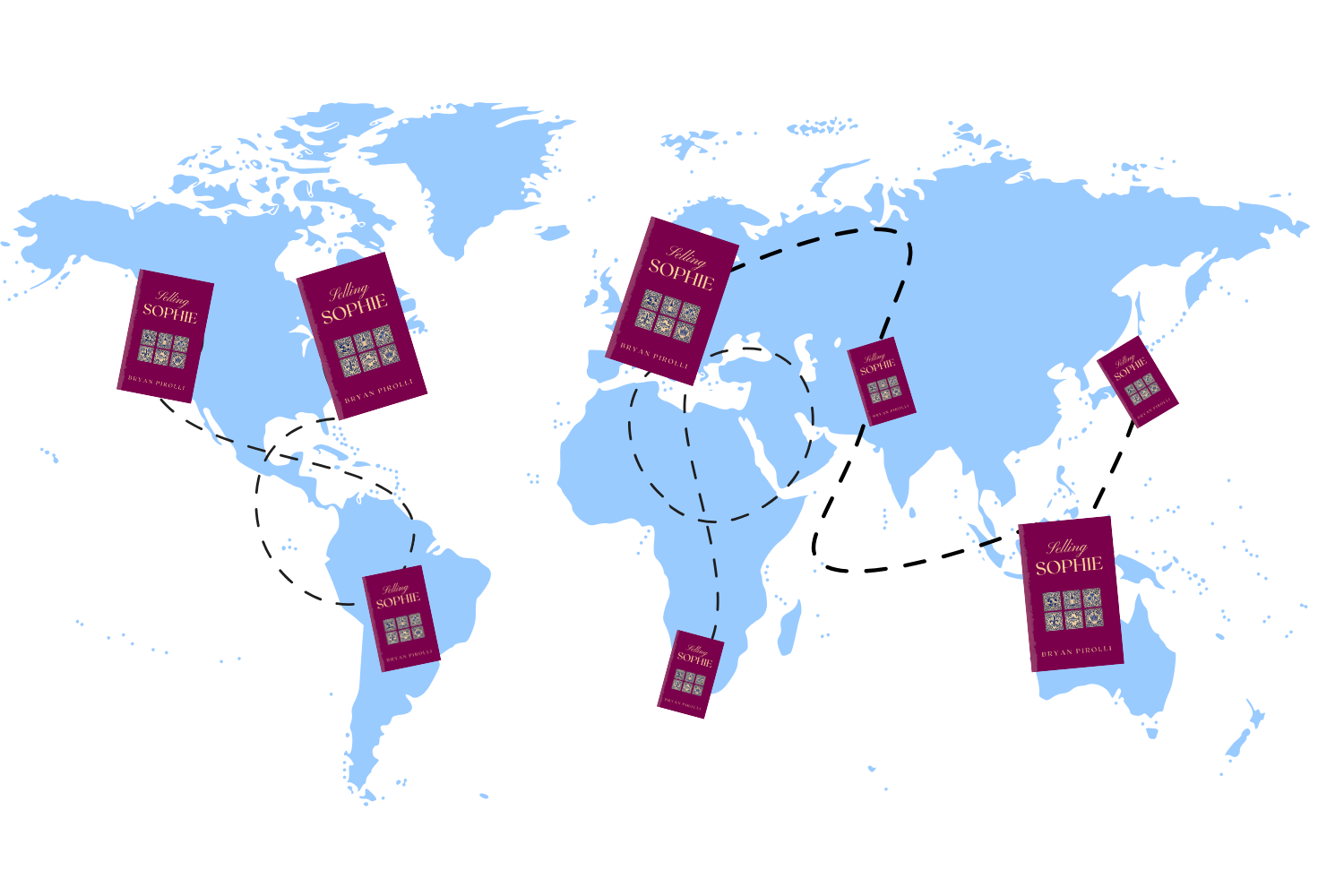
Seeing my book sold around the world is wild…but required planning.
So here’s the thing. I’m American, but also French, and I live mostly in Portugal. When I decided to self-publish my book, I had a lot of things to think through. My readers were going to be scattered everywhere, and getting books to them wouldn’t be simple.
Choosing publishing routes and platforms required a little extra care to make sure I was doing it right—or at least to avoid a catastrophe. Here are the three things I didn’t know I needed to think about. Until I did.
1. Know Where Your Audiences Are
Choosing a publisher for my paperback required learning platforms and adapting formats to meet their requirements. That’s standard. But I also had to think about geography. When I plotted my approach, I knew I had a large network in the US, Canada, and France. I wanted them all to be able to get books easily (see above). But I didn’t want to close myself off to other markets, either. So what to do?
On one hand, it made sense to push out an ebook right away so everyone could access it. But I wanted a physical artifact. So every decision built towards making my paperback accessible where my audiences were. I chose a print -on-demand publisher who could service the markets I knew were listening to me.
2. Customs Fees are Real
But knowing a printer can send books internationally wasn’t enough. I didn’t expect jumping a massive hurdle to have my book delivered.
One print-on-demand publisher lacked a presence in the European Union and shipped from the United Kingdom, instead. Thanks to Brexit, the book was subject to customs fees that amounted to more than twice the value of the book. Portugal was taxing the book to filth, and I wasn’t having it.
And I couldn’t fathom my customers dealing with that, either. The risk was too great.
The result? I never saw a review copy from that publisher and opted for a slightly more expensive one that could be delivered easily within Europe. I expected some trouble, but not such a massive fee. Now I know.
3. Have a Plan—Even a Bad One
I still don’t know if I did it “right” by publishing a print run first and then moving to an ebook version after. All I know is I made a plan and I stuck to it. Print run first. Ebook next. Global distribution later once I have a reputation.
Perhaps I had a rationale at the onset: thinking about getting reviews on Goodreads, drumming up some social media recognition, and figuring out if the book was well received in the first place. I was already on Substack, but that’s not an adequate launchpad for an author’s career.
And so you’re asking, “Why not just have a good plan from the get-go?” Well there are so many moving parts to publishing a book that I just had to push it forward and see what worked and what didn’t.
The one thing I prioritized was making physical copies accessible without any hurdles posed by customs or postal concerns. As I look to launch the ebook, however, I’m also ready to see how far my reach goes in this crazy publication world.
My debut novel Selling Sophie is available exclusively in paperback (for now!). Look for the ebook later this summer.